Film Room: Impound it – Notre Dame’s Run Game In Green Bay
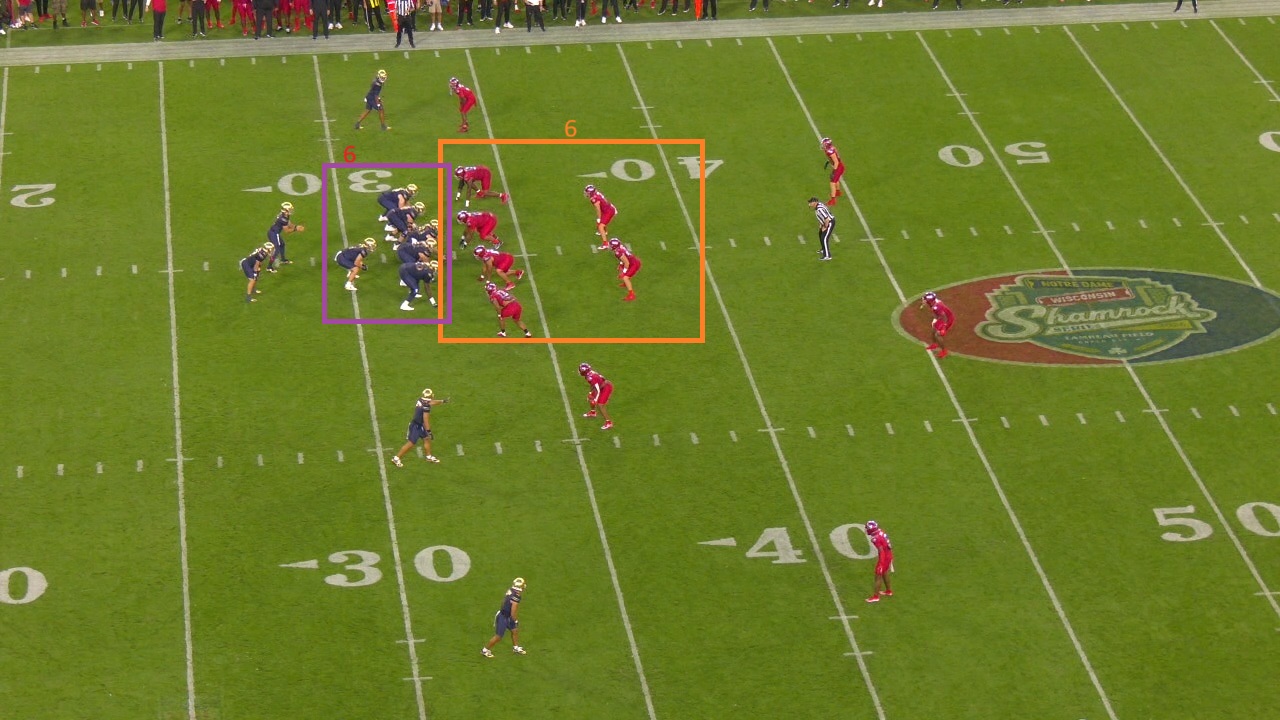
Mike Denbrock and Notre Dame sought to establish the run versus Wisconsin in their opening game in the 2026 season. Wisconsin, early in the game, consistently gave the Irish favorable box numbers (even number of blockers versus defenders), yet the Irish were unable to overly punish the Badgers.
First Play – Typical Insert Zone
The first play I will examine is a stable play that the Irish ran numerous times throughout the game. I am identifying the play as Insert Inside Zone, but I could be argued into thinking it was a Insert Mid Zone (largely the difference between those two is the aiming point of the running back and linemen).
In inside zone, each lineman takes an initial vertical play side step and combos the defensive players if they aren’t covered before one of them moves to a linebacker. The “Insert” part of the play is having the tight end (in this case Cooper Flanagan) involved in the play.
In the play, Carr sees the box count is even and motions Flanagan inside the box and audibles the play into his chosen run. The blocking sets up well for Aneyas Williams to run toward the edge, but he is tackled after a nice gain of 4-ish.
Second Play – Rare Play-action off of Insert action
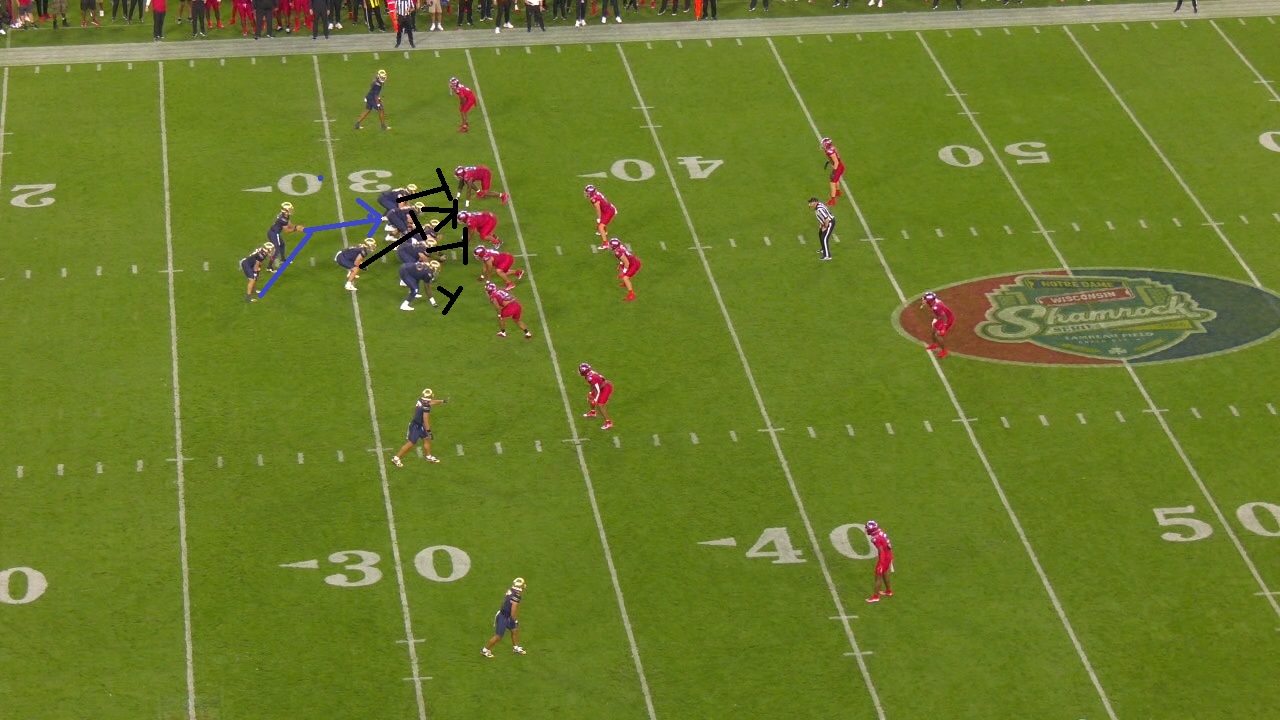
In the second play, Denbrock dials up a rare Play Action . Mike has consistently ran near the lowest amount of Play Action passes in FBS, with a rate of only 18.3% (131st) in 2025. The play he dials up is one of his favorite deep passing concepts, commonly called “Yankee” by many.
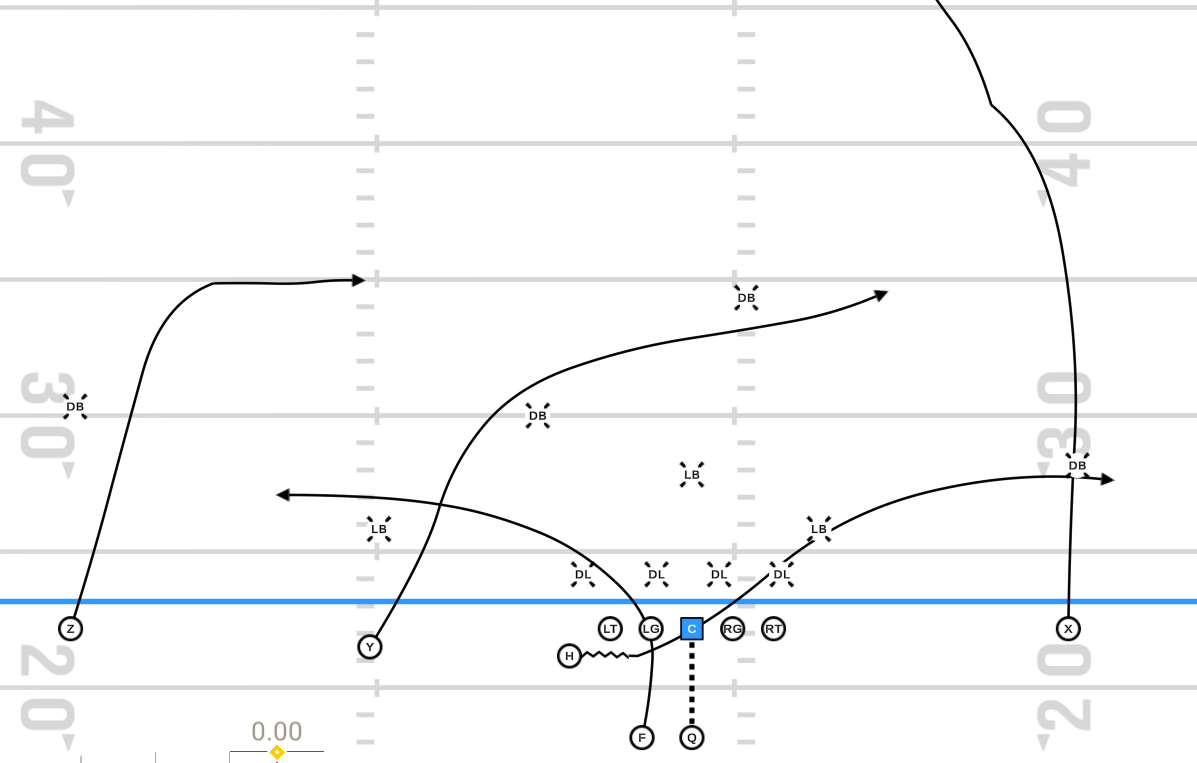
In this play, Notre Dame dials up a 5 man protection and two check releases, one each from the running back and tight end. The passing concept basically boils down to a deep post by the boundary solo receiver and a deep over by the slot and dig by the field outside receiver . The design of the play is for the deep post to clear out the safety and allow for Carr to hit the slot over-route in stride.
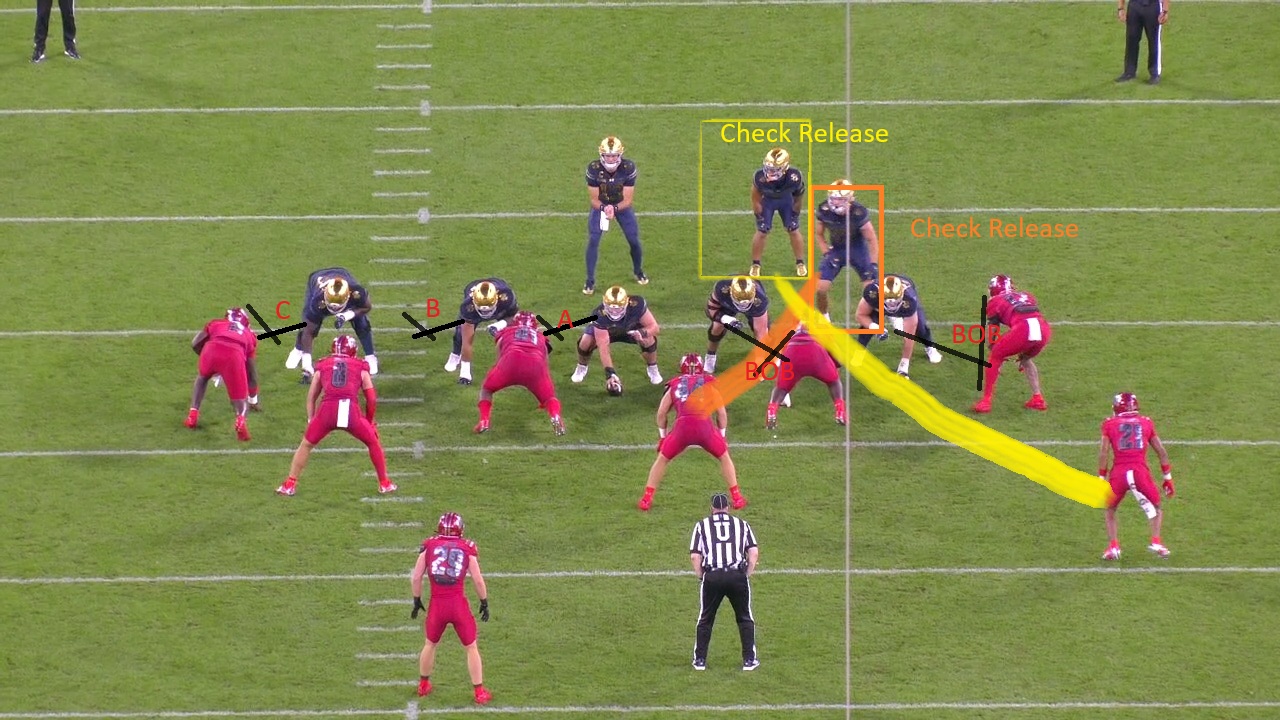
The pass protection is very common protection called “Half Slide” where one side of the offense takes a gap step toward the gap they are shifting to protect and the other side is “Big on Big” (BOB). This is a very versatile type of protection that allows for the sliding side to have very solid answers toward twists and other additional blitzers on that side. Finally, both the running back and tight end are initially in the passing concept: protecting against the threat of either linebacker inserting themselves late into the rush. Once those two aren’t needed, they both release into the flat – further stressing the offense.
The play works beautifully for a nice gain, but is called back for holding (didn’t seem like much of a penalty to me).
Third Play – Mid Zone Read for the Touchdown!
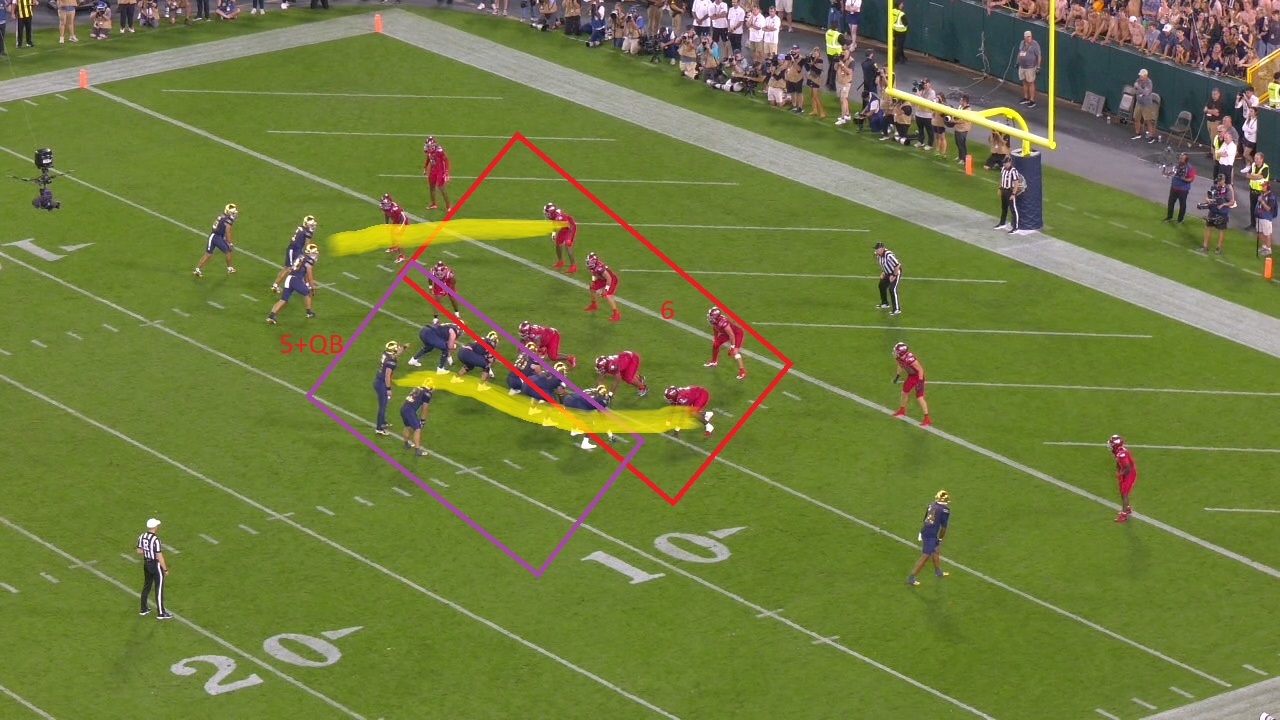
It is a dull film post that doesn’t show at least one touch down: In this play Carr involves his own number in the running game by executing a Mid Zone Read for the score. Mid Zone Read means that the quarterback is “reading” one of the players to make him wrong while adding himself as a blocker number into the run scheme. The “Mid’ potion of it is really well explained here.
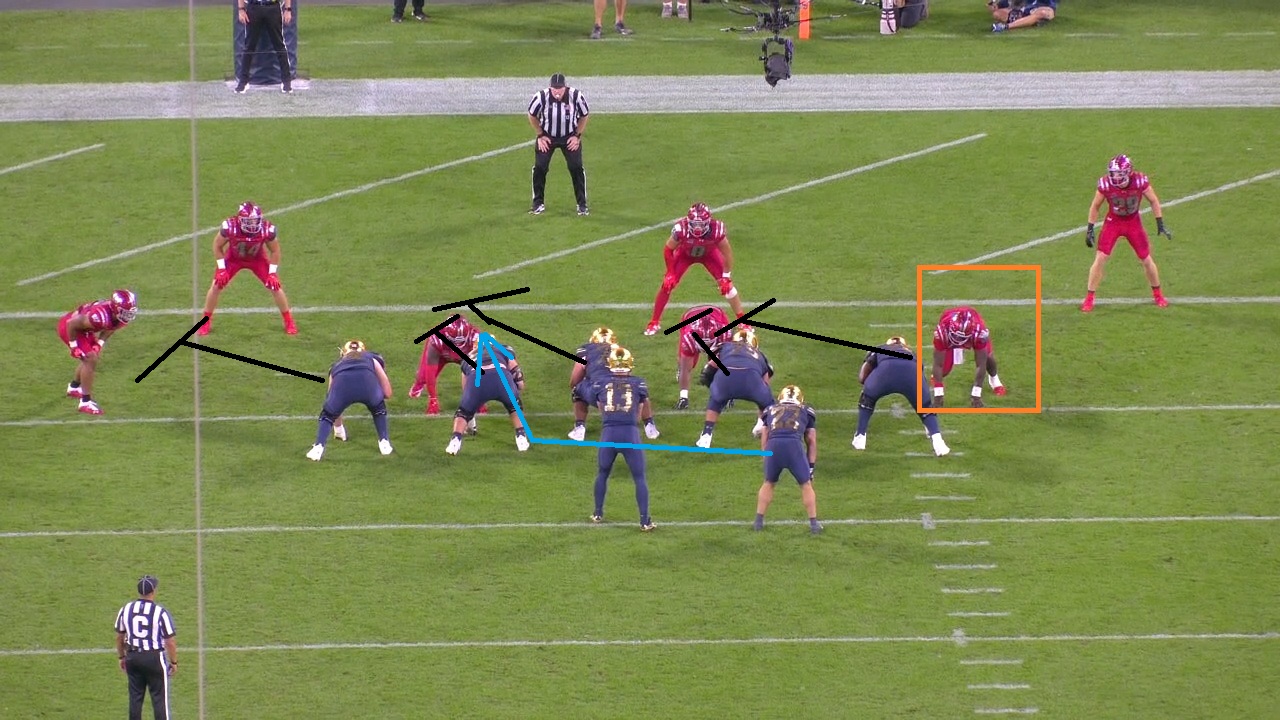
Carr motions Aneyas Williams into the backfield and the offensive team now has 5 blockers + 1 for Carr versus 6 blockers, therefore this is a good box to run into. The Irish linemen do an excellent job of running over their defenders to make space for Williams who scores six with minimal contact.
Further Resources:
For further Irish Breakdowns versus Wisconsin, please see this excellent video by Landon Tengwall.


Nice! Love the work you put into the diagramming. DGT!
Glad you like it! Haven’t had a post in a couple of years. Its nice getting back into it.