
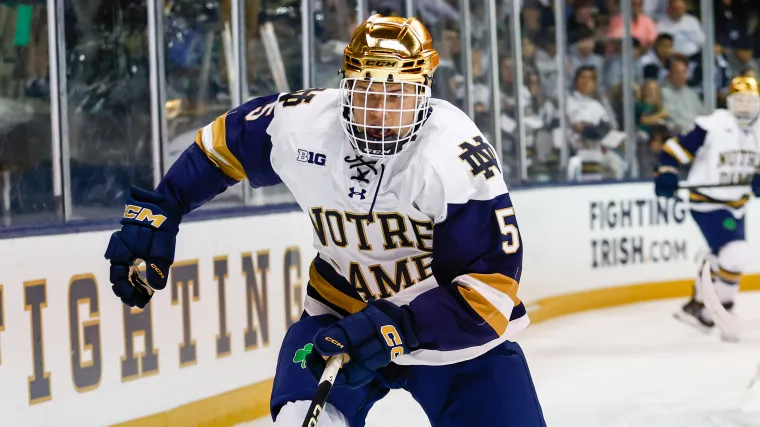
This moment will be seared into my memory forever. It’s the first week of September 2001 and our freshmen class at St. Lawrence University is sitting outside on thin folding chairs listening to a bunch of faculty speaking during an orientation program. At one point, someone mentioned the youngest and oldest members of the freshmen class. The oldest? That would be a 21-year old from Brampton, Ontario.
Yup, a hockey player.
My heart sank a little bit. The last 11 years my life were dominated by playing hockey, deep in the AAA world, then to prep school in New England. When I left home for Connecticut at 16, I repeated my sophomore year. Why? We told most people it was due to more difficult academics but the real reason was to get bigger, faster, and stronger before trying to play college hockey.
While chasing the Division-I dream I found myself trying to walk on at St. Lawrence. Despite the extra year I was still small, skinny, and stood tall odds against someone legally allowed to drink in the United States already on scholarship. It didn’t work out.
When news broke recently that the NCAA is likely to implement a new eligibility system I thought about that sweaty day in 2001. Starting in 2027, we’re likely to see eligibility of 5 years–and 5 years only with no redshirts medical or otherwise–beginning from high school graduation or the 19th birthday, whichever comes first.
The ripple effect in the hockey world could be massive.
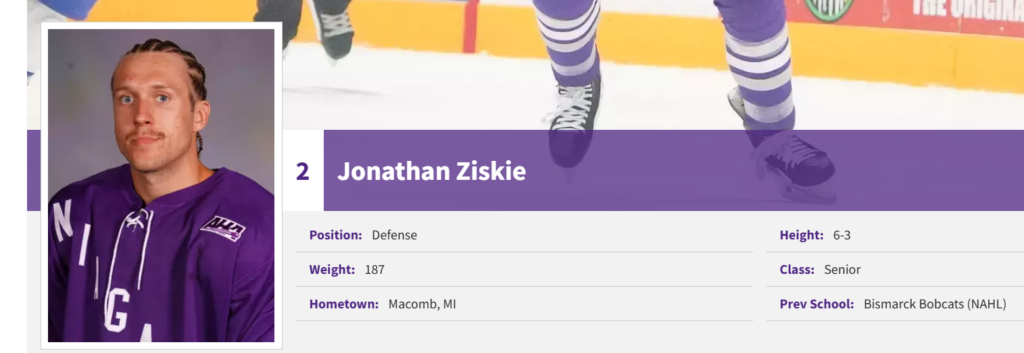
A recent social media video from my local sports radio station put things into perspective. Buffalo Sabres forward Zach Benson is finishing up his 3rd year in the NHL and will turn 21 in May. Yet, Benson is younger than every single player on the college rosters of Niagara and Canisius hockey. Now, I haven’t fact checked this but I pulled up the first senior on Niagara’s hockey team and he just turned 26 years old:
He’s old.
If this eligibility rule comes into effect, there will be some tough decisions to be made. The blue-bloods in the sport probably won’t worry too much and in reality will be happy as they’ll continue to have the pick of the top 17 to 19 years old in the sport. The smaller and less wealthy schools could find this transition extremely difficult.
The biggest changes would be felt further down the sport, especially in the junior hockey ranks that have been welcoming and developing 19 to 21 year olds after they’ve graduated high school, creating an excellent feeder system to college hockey. Take Jonathan Ziskie above, he played 3 seasons in the tier II NAHL before enrolling at Niagara and that timeline is fairly common in college hockey these days.
The NAHL has 34 teams scattered all over the country from the eastern seaboard, to the upper Midwest, and Texas plains. Will a league like that start to struggle? The sport will definitely have to get much younger and places like the NAHL will have to rely on drafting kids early in their high school careers. For reference, last year’s no. 1 NAHL pick Jonathan Doucette played AAA hockey in Massachusetts, spent a year playing in the Alberta Junior Hockey League, and will turn 20 after this 2025-26 season concludes.
Will these leagues be forced by a new NCAA rule to start drafting and taking players when they are 14 and 15 years old instead? The other option that surely will be used is to continue adding much older players to college rosters but only for a year or two, instead of the full 4-5 years. Either way, if eligibility is changing the way things are being reported it’s going to have a a big trickle down effect in college hockey and other sports, as well.

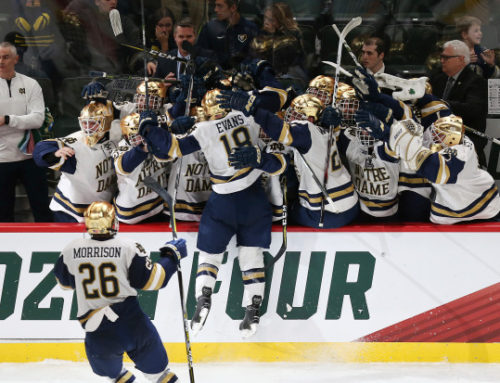
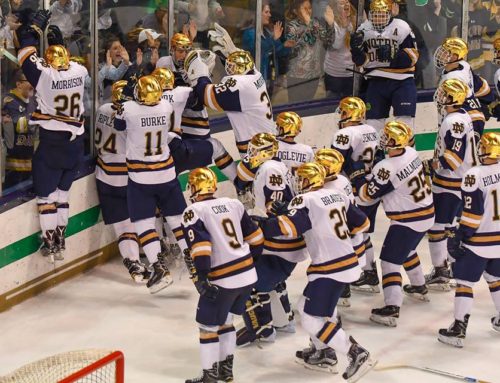
I imagine this will be challenged in court. As these players are being paid, will it be legal to say they’re too old to be paid? A kid can’t say he needed to mature some before going to college? Coaches would tell you, as they’ve told me, it’s one of the benefits they like with older players. An 18-19 year old will most likely have already found trouble, if he’s going to, before he gets to campus as a 20 yr.old. Seems to me the NCAA will have a fight from a few different angles.
I’ve always thought it crazy for a kid to play 2 yrs of Jrs to play D3 hockey and many do. They find out at 20yrs old that there are other things besides hockey and that they really don’t want to play D3 hockey as much as they thought.
The court challenges are going to be very interesting. Maurice Clarett’s lawsuit challenging the NFL’s age rules failed in court (although he was challenging to be allowed to play younger, rather than older). But the NCAA has become an absolute punching bag in court lately; I can’t remember the last time they actually WON a contentious decision.
Hockey has always had a weird system with drafting and signing guys, largely because a lot of the guys never go to college, so you’re fitting college to a foreign system as opposed to the other way around.
When I was at ND, I always remember the hockey guys in my classes being much older and being able to buy me alcohol when we hung out.
I also remember when Lowell was a thorn in ND’s side in the tournament, they were all old
With CHL players allowed into the NCAA and more teams going to Europe for talent, D1 puck will have more talent than ever.